Equal weight does not mean an identical transport plan
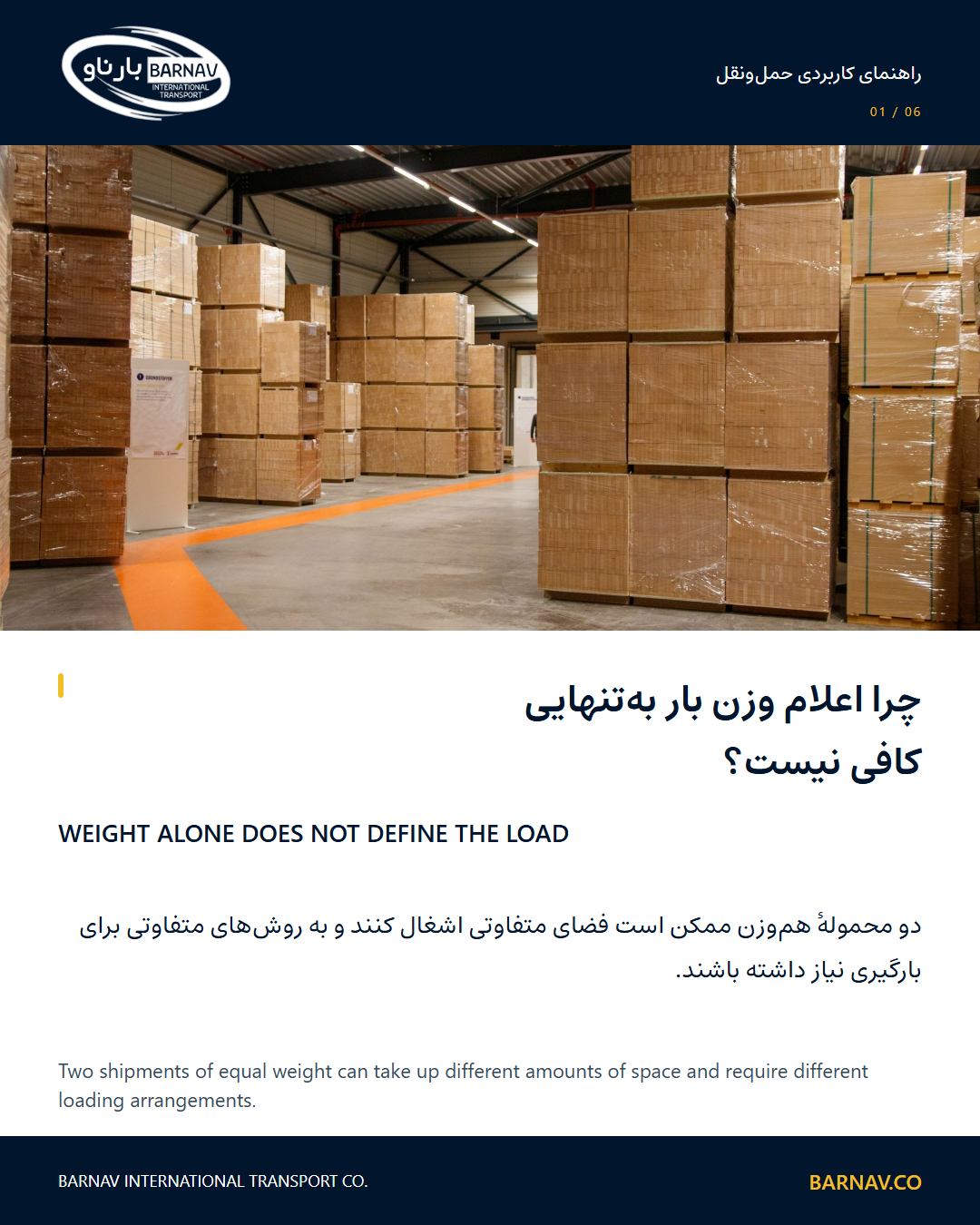
Total weight is a starting point, not a complete cargo description. Package count, occupied space and handling restrictions can differ between shipments of equal weight. Ten bulky light crates may need a different arrangement from one dense item of the same total mass.
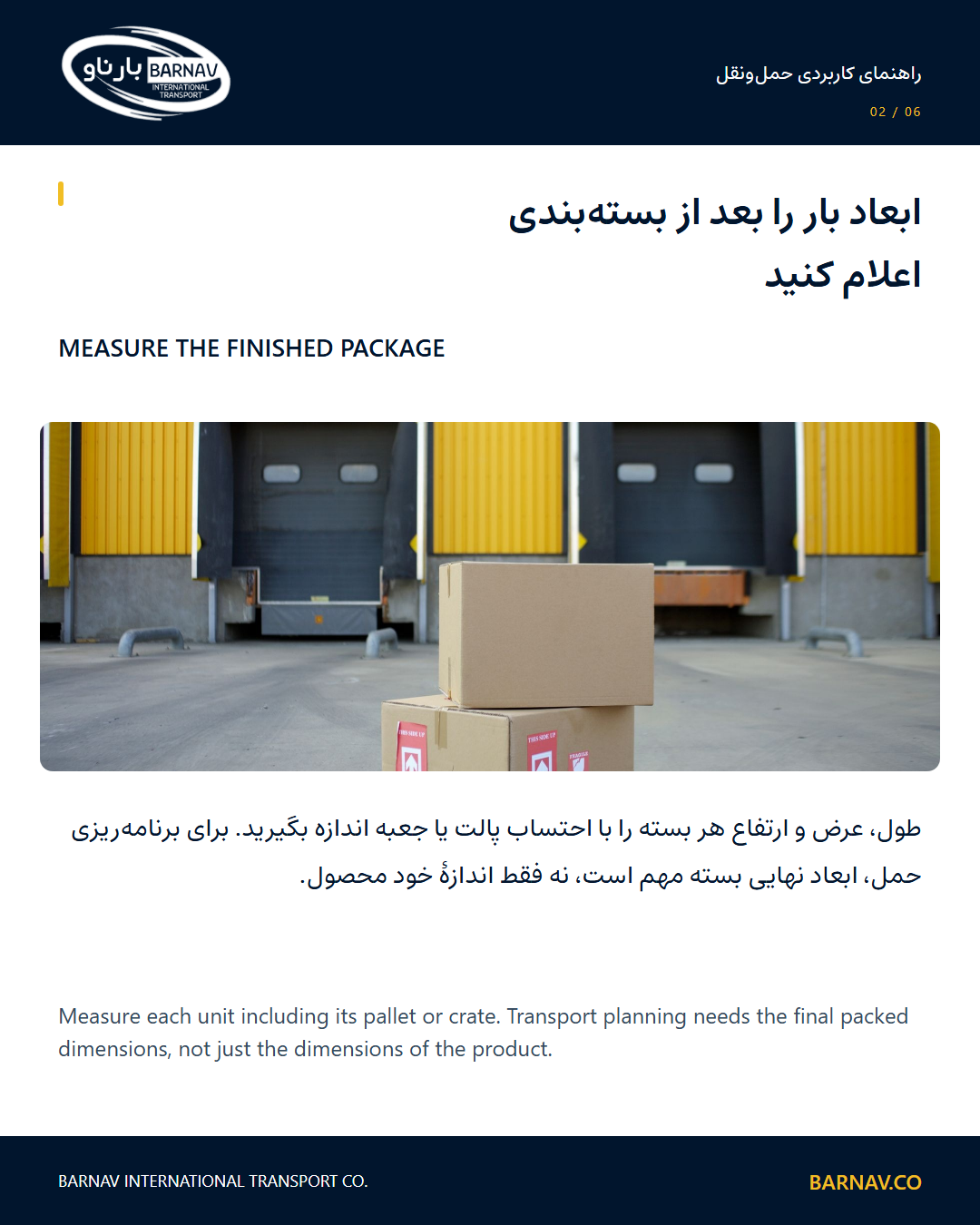
Measure the final packed units
Provide length, width and height after packing, including pallets, crates and protrusions. State the measurement units and distinguish each package’s gross weight from the shipment total. If package sizes differ, an average measurement is not a substitute for an itemised packing list.
A simple volume calculation
For a rectangular unit, length × width × height in metres gives geometric volume in cubic metres. A unit measuring 1.2 × 1 × 1 metres occupies 1.2 cubic metres geometrically. This alone does not establish usable loading space or the freight charge: shape and stacking restrictions also matter. There is no single volumetric conversion factor applicable to every transport mode and carrier.
Confirm stacking and securing
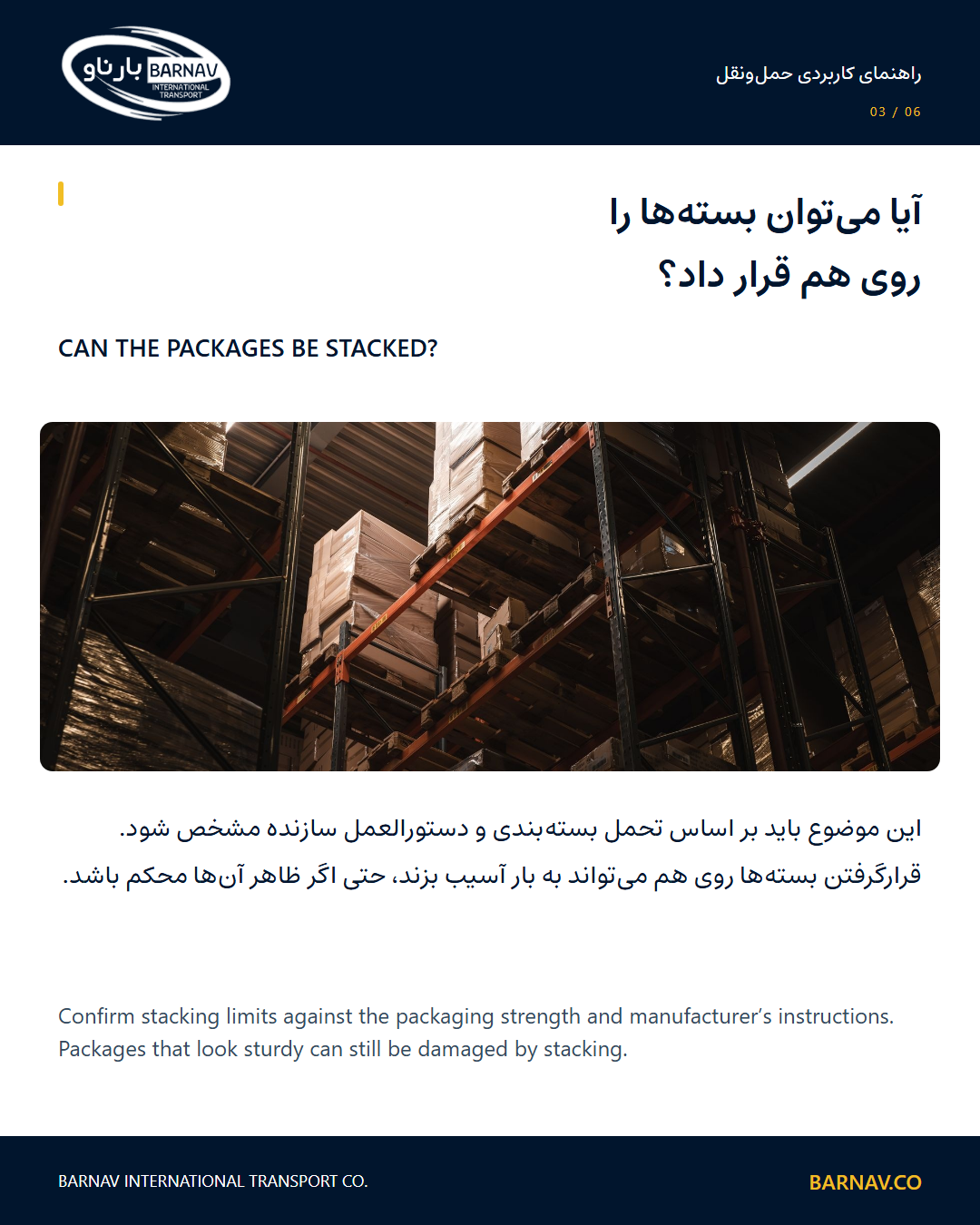
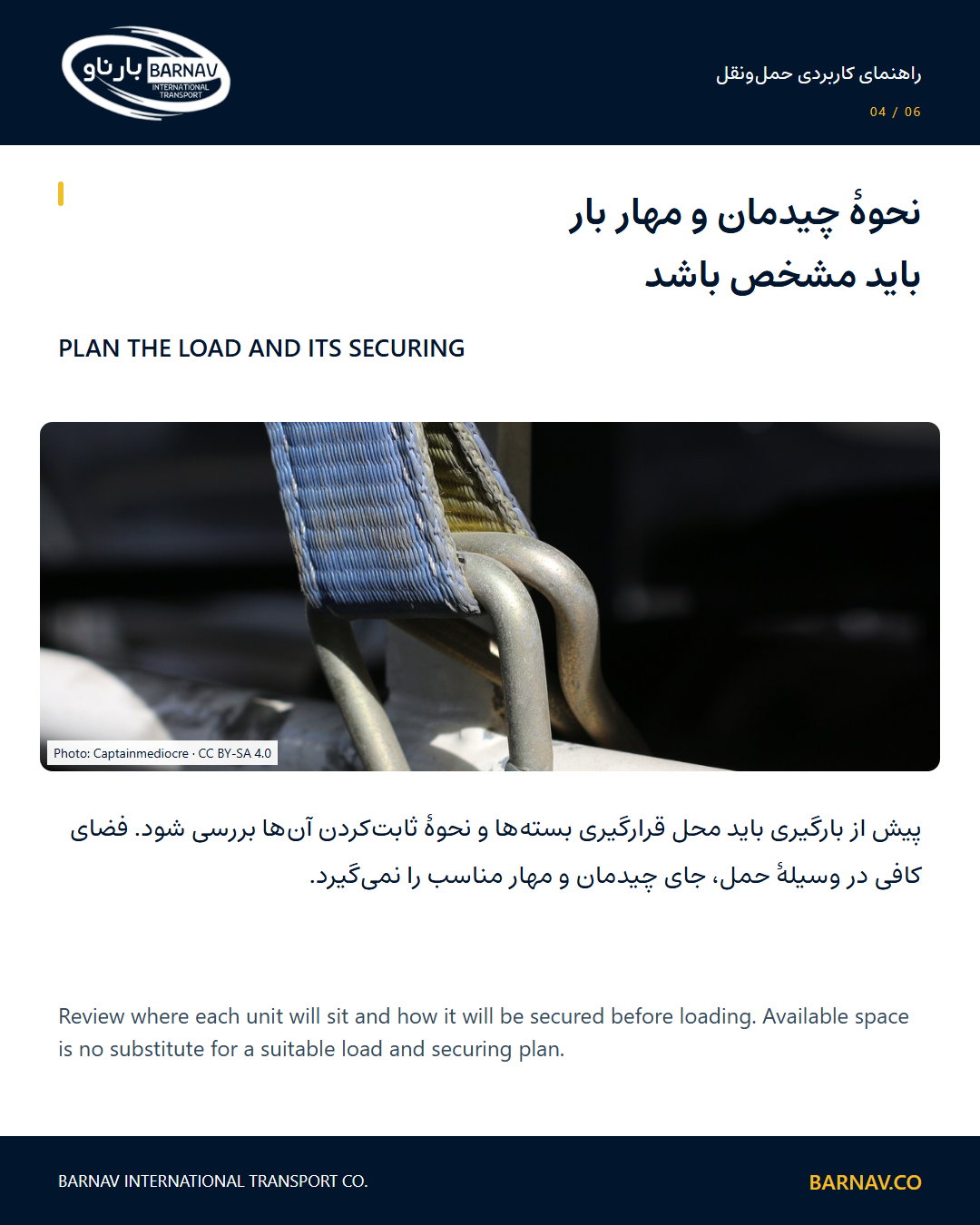
State whether units can be stacked, using the packaging strength and manufacturer’s instructions. A sturdy appearance is not sufficient. Positioning, weight distribution and securing must suit the vehicle or transport unit and intended journey. Spare space cannot replace an appropriate securing arrangement.
Handling at both ends
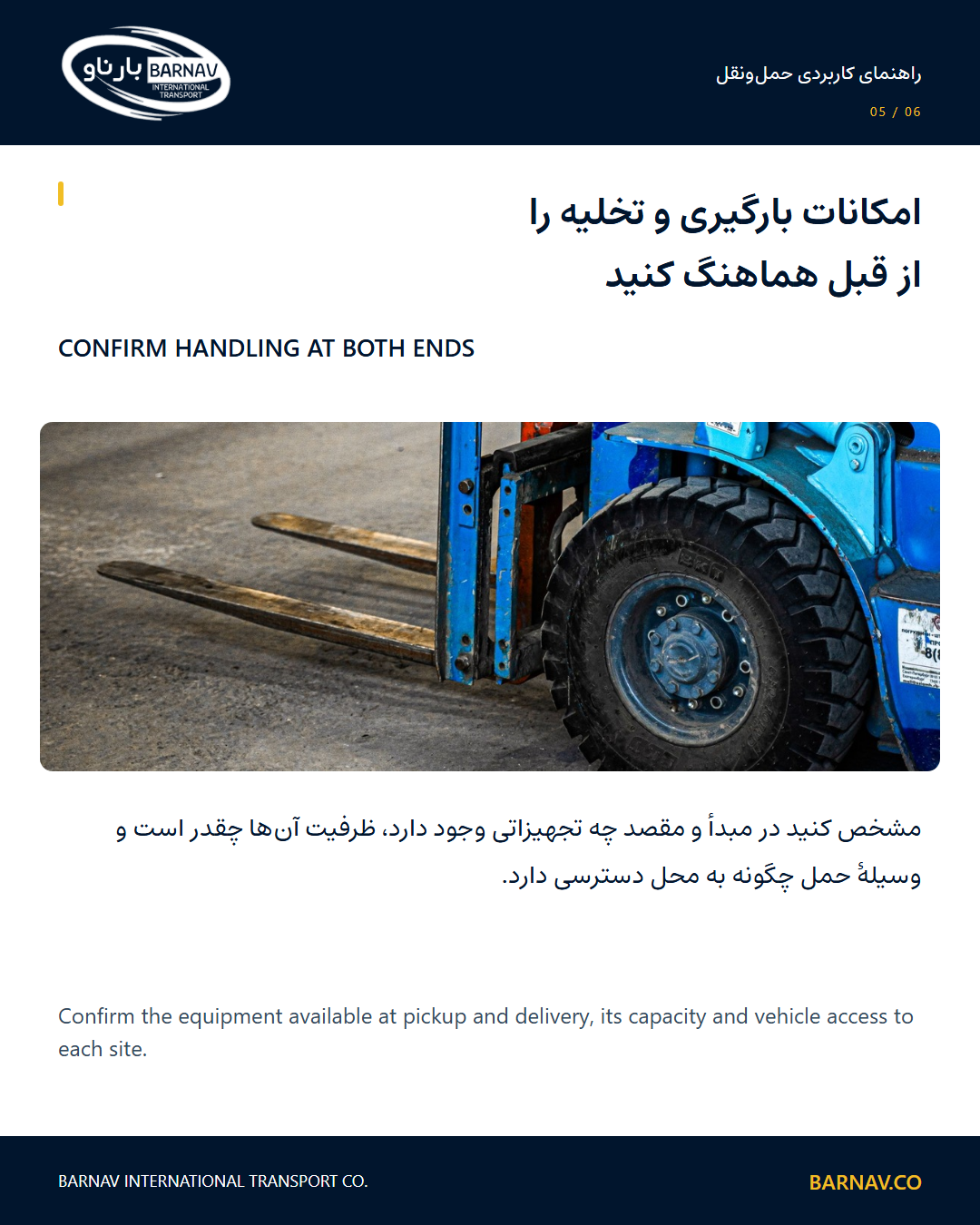
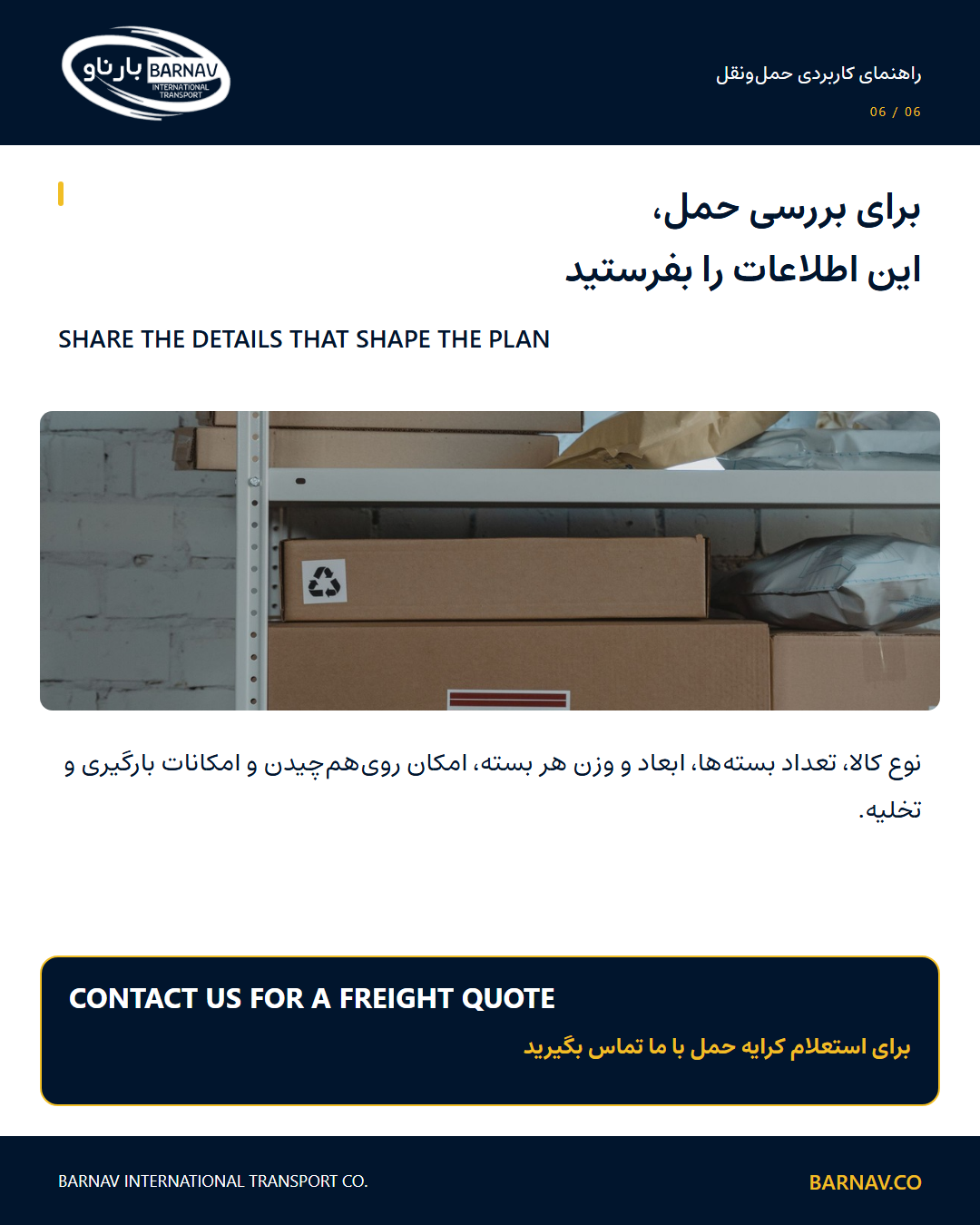
Confirm loading and unloading equipment, its capacity and vehicle access. Disclose entry restrictions, receiving hours or crane requirements before booking. An enquiry should combine the commodity, route, count and details of each package, stacking restrictions and photos.
Related reading and freight enquiries
Illustrated guide
Swipe or scroll horizontally. Select an image to view it at full size. Original slides are in Persian and English.