Before signing the receipt
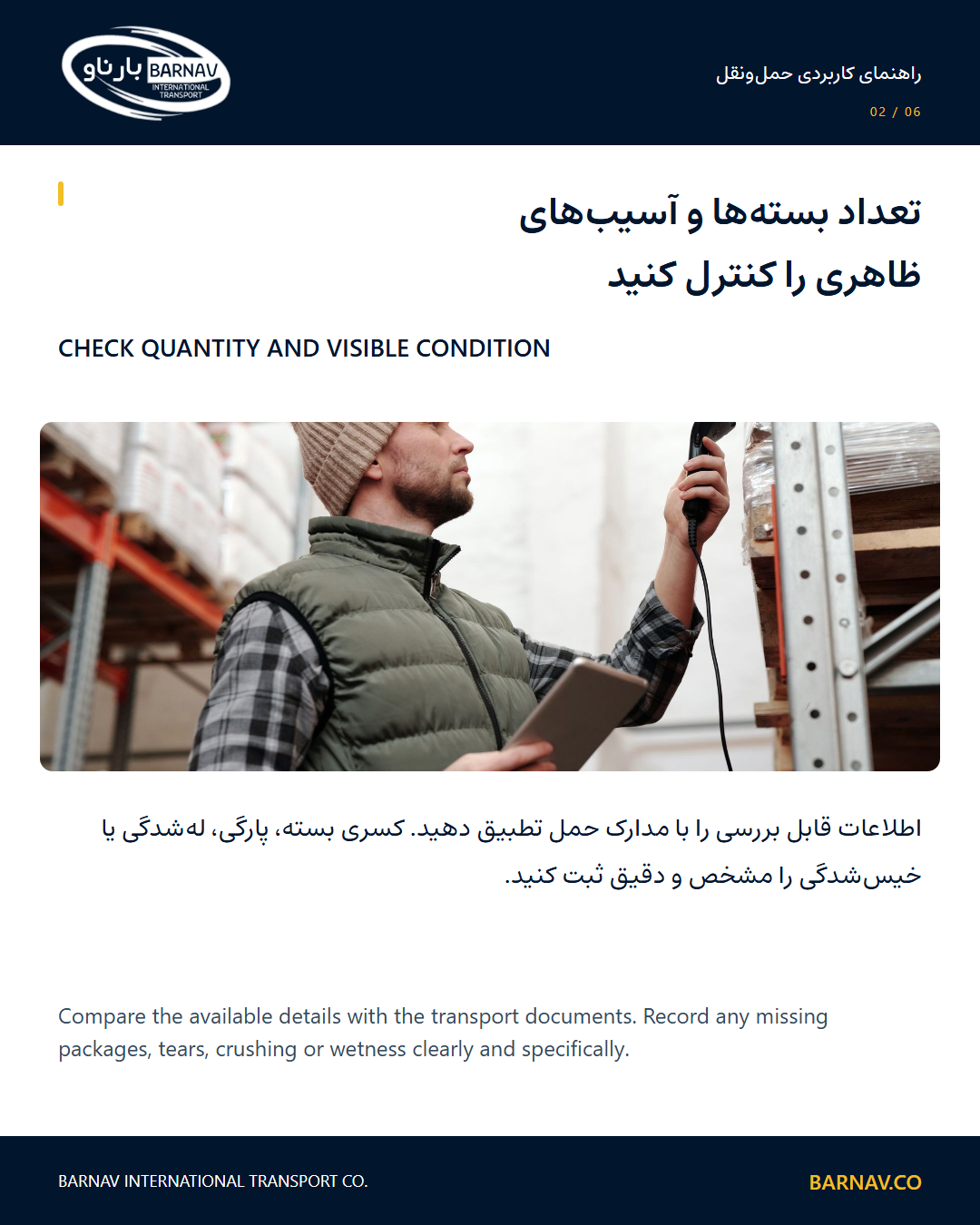
Compare the package count and visible condition with the transport documents as far as access and safe conditions allow. Do not confirm items you have not checked. An external inspection cannot establish the condition of concealed contents; note any inspection limitations accurately.
Make exceptions specific
Identify missing, torn, crushed or wet packages by their number or mark. Instead of writing “cargo has a problem”, describe the affected unit and location. For example, “package 3 of 10: tear at the upper-right corner” records an observation; it does not by itself establish the cause or liability.
Where a seal is used
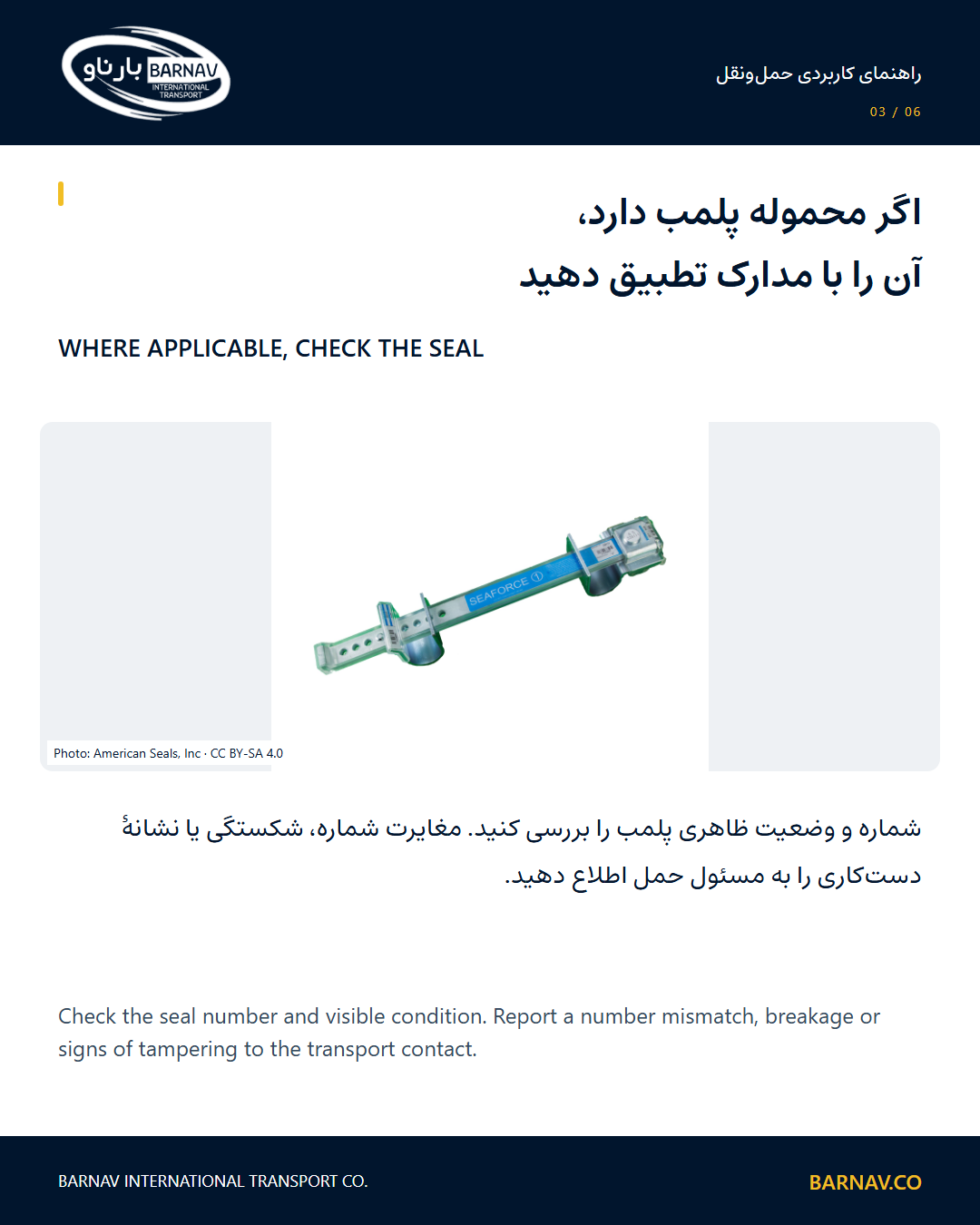
Compare the seal number and visible condition with the documentation. Report discrepancies, breakage or signs of tampering to the transport contact. An intact seal alone does not prove cargo condition. Consider shifted cargo and pressure against doors before opening, and involve trained personnel.
Photographs that can be traced
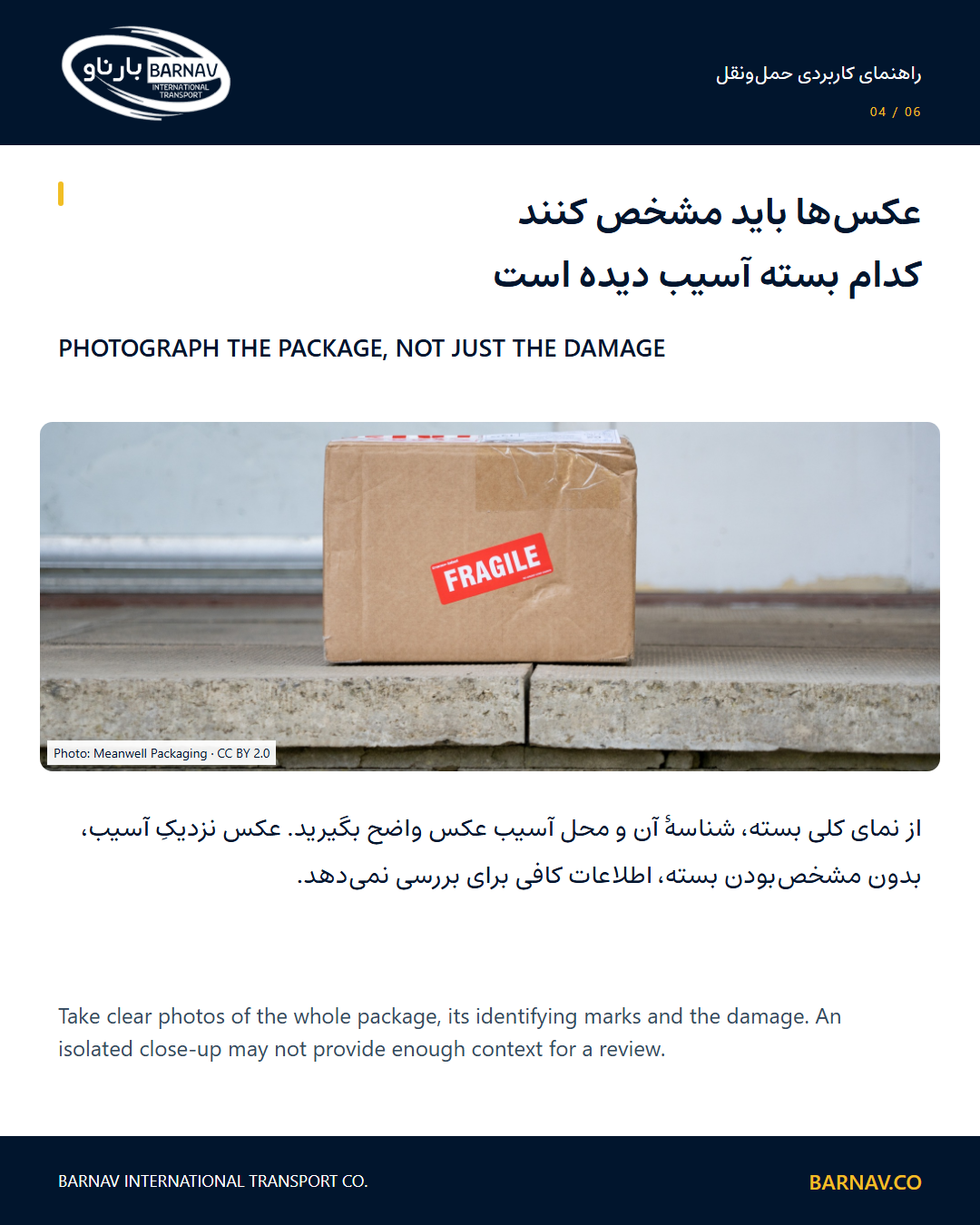
Capture the whole package, identifying marks and the affected area clearly. A close-up without the package’s identity may lack context. Keep the time, place and shipment reference with the evidence. The educational illustrations in this article are not evidence of a damage incident or a Barnav project.
Notification and records
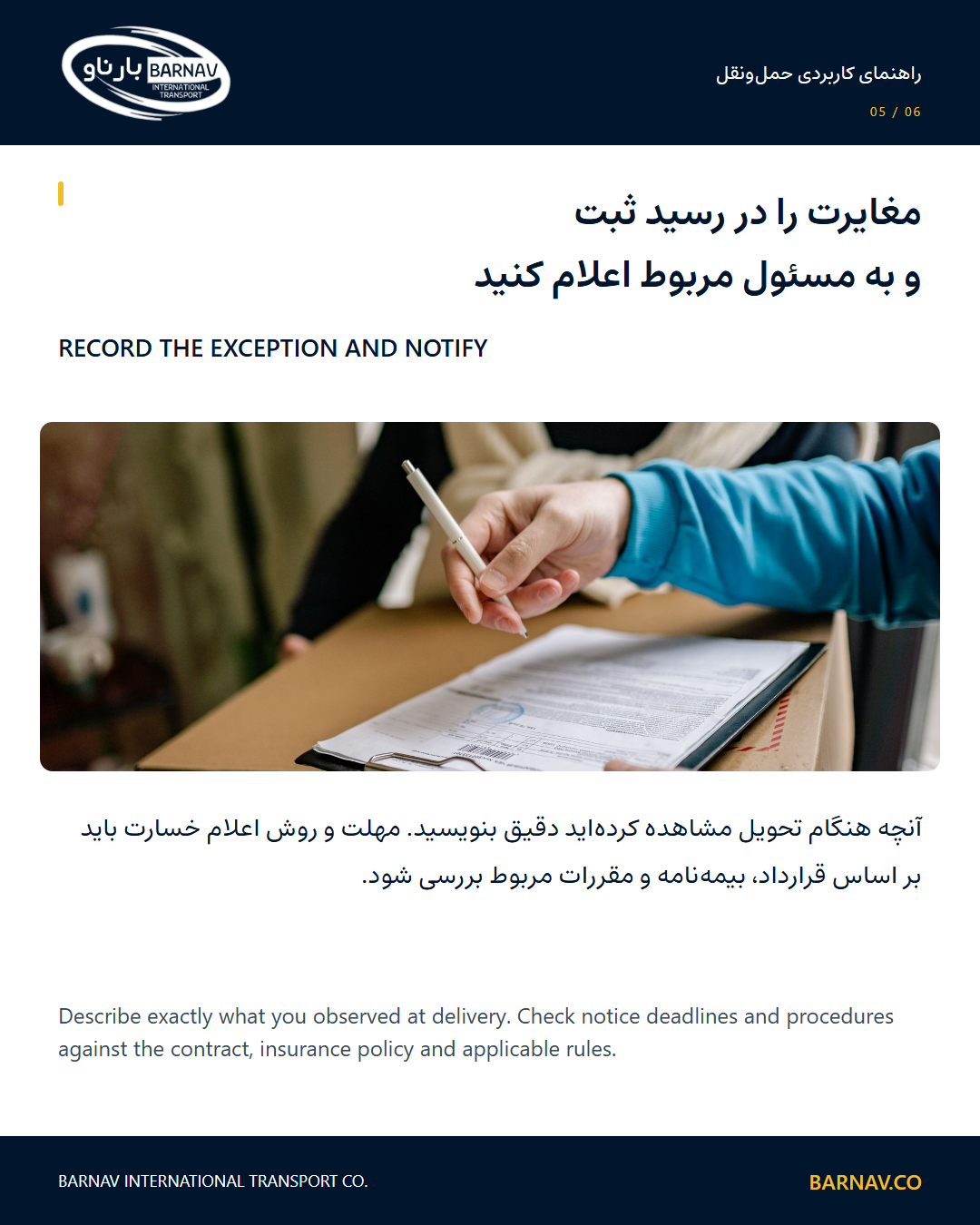
Record observations on the delivery receipt and notify the transport contact without delay. Keep the receipt, transport documents, photos and correspondence together, retaining the relevant packaging for inspection. Claim procedures and deadlines depend on the contract, insurance policy and applicable rules. This checklist creates neither a universal legal deadline nor a guarantee of compensation.
Related reading and freight enquiries
Illustrated guide
Swipe or scroll horizontally. Select an image to view it at full size. Original slides are in Persian and English.